News

How to solve the challenge of laboratory storage safety? Compo provides the perfect answer with its innovative glass reagent bottles.

2025-12-02 0 Leave me a message

In the daily operations of modern laboratories, reagent storage safety remains a major challenge for researchers. Laboratories face multiple challenges. These include improper storage of corrosive chemicals and degradation of light-sensitive reagents. Handling large reagent volumes is difficult. Long-term storage leads to volatile loss. These issues compromise experimental accuracy and personnel safety. Kangbo's new high borosilicate glass reagent bottles solve these problems. They incorporate multiple technological innovations. They provide complete and effective solutions for these persistent industry pains.

I. Delve into industry pain points and reshape safety standards

When discussing the initial motivation behind the product development, Mr. Meng, Product Director of Compo, stated, "We spent two years visiting over a hundred laboratories worldwide and discovered that many institutions still use storage containers with serious safety hazards. Some bottles are fragile, some are not properly sealed, and many lack user-friendly design, all of which directly or indirectly contribute to laboratory accidents."Based on this in-depth research, Compo invested heavily in assembling a professional R&D team, undertaking comprehensive innovation from materials science and industrial design to production processes, ultimately launching this revolutionary high borosilicate glass reagent bottle series.

II. Technological innovation to break through traditional limitations

Table 1: Key Technical Parameters of Kangbo High Borosilicate Glass Reagent Bottles

project Parameter Indicators Test Standards Technological advantages
Coefficient of thermal expansion (3.3±0.1)×10⁻⁶/K ISO 7991 Temperature resistance far exceeding that of ordinary glass
Water resistance Level 1 ISO 719 Extremely resistant to hydrolysis, ensuring long-term stability
acid resistance Level 1 ISO 1776 Can withstand long-term corrosion from strong acids
Alkali resistance Level 2 ISO 695 Excellent resistance to alkali corrosion
Operating temperature range -80℃ to +280℃ - Adapting to extreme experimental environments
Thermal shock temperature difference ≥200℃ - Excellent thermal shock resistance


The most groundbreaking innovation in this product series lies in its unique one-piece molded handle design. Through fluid dynamics analysis and ergonomic research, the R&D team conducted hundreds of experiments and optimizations to determine the optimal proportions of the handle's curvature, width, and thickness. "We specifically considered the practical needs of laboratory staff who require protective gloves," Mr. Meng explained in detail. "The anti-slip texture on the inside of the handle, the curvature design that conforms to the natural bend of the fingers, and the scientifically calculated load-bearing capacity ensure safe and stable handling even when filled with 4000ml of solution."

III. Comprehensive protection to ensure reagent integrity

Table 2: Specifications and Configuration Details of Compo Reagent Bottles

Capacity(ml) Bottle height(mm) Bottle diameter(mm) Bottle wall thickness(mm) Ear-lift design Applicable Scenarios
1500 235±5 135±3 2.0±0.2 Standard Ear Lift Routine reagent storage and teaching experiments
2000 265±5 145±3 2.2±0.2 Strengthen ear lifting Conventional laboratory, chemical synthesis
2500 295±5 155±3 2.4±0.2 Strengthen ear lifting Biopharmaceuticals, intermediate storage
3000 325±5 165±3 2.6±0.2 Strengthen ear lifting Large-scale storage of reagents and hazardous chemicals
4000 365±5 175±3 2.8±0.2 Strengthen ear lifting Industrial applications and automated production lines


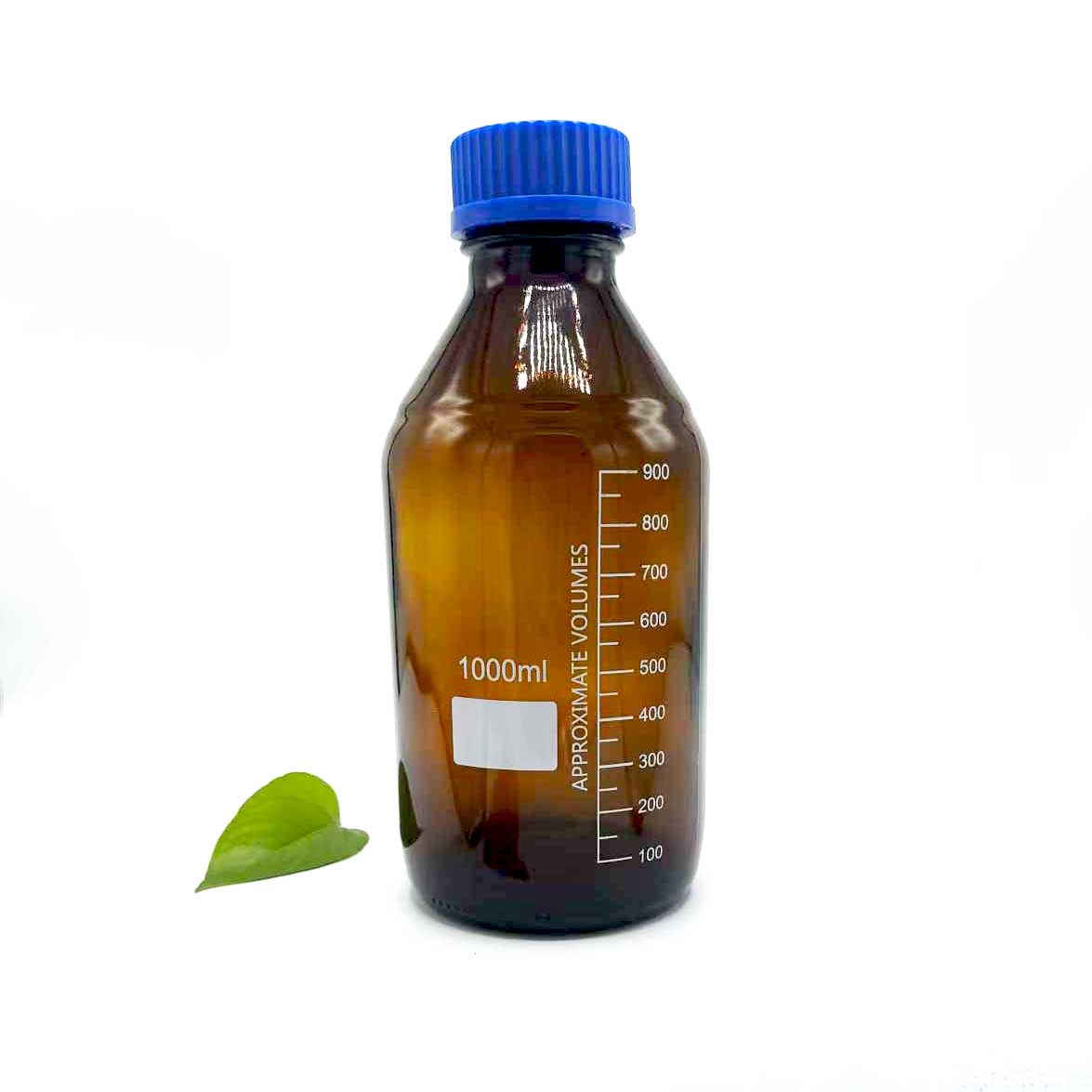
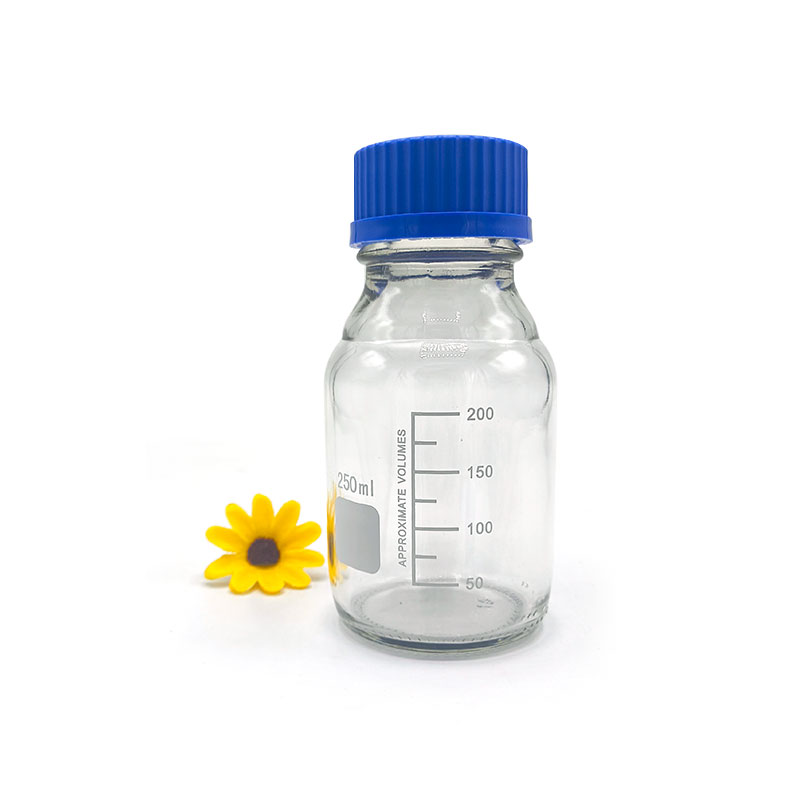
In terms of protective performance, Compo offers two professional options. Dr. Wang, Technical Director, explained in detail: "Our transparent bottle uses an ultra-transparent process, with a light transmittance of up to 91.5%, making it easy to observe the contents. The brown bottle, on the other hand, utilizes a special nano-level colorant dispersion technology to ensure optimal blocking of harmful light wavelengths from 290nm to 450nm, which is precisely the key wavelength range that causes many photosensitive reagents to deteriorate."

IV. Strict quality control earns industry trust

Professor Zhang leads quality management at a national key laboratory. He shared their experience. His lab switched to Compo reagent bottles last year. They replaced all traditional containers. This change solved reagent leakage and evaporation problems. Precision instruments confirmed the improvement. Volatile reagent loss dropped sharply. The monthly loss rate fell from 3.2% to under 0.5%.This improvement is crucial for ensuring the accuracy of experimental data."

Kangbo has established an industry-leading end-to-end quality control system, from raw material testing to fully automated production and rigorous outgoing inspection, with quality requirements exceeding industry standards at every stage. "Each batch of our products is equipped with complete traceability documentation," said Ms. Li, Quality Director. "From raw material batch numbers and production teams to testing personnel, all information is traceable, ensuring the utmost consistency in product quality."


V. Innovation and Research, Continuous Breakthroughs

Kangbo's R&D center has a professional team. The team keeps innovating products. They recently made a major breakthrough. This breakthrough is in glass surface treatment technology. They use a special surface process. This process improves bottle impact resistance by 35%. It also significantly enhances cleaning efficiency. "This innovation extends the lifespan of reagent bottles by at least two times," explained Dr. Liu, the R&D manager. "Furthermore, the special surface properties make residues easier to clean, greatly reducing the risk of cross-contamination."

VI. Sustainable Development and Fulfilling Environmental Responsibility

In terms of environmental protection, Compo is at the forefront of the industry. "We not only provide reusable products, but also have established a comprehensive product lifecycle management system," Mr. Meng emphasized, "including professional cleaning and disinfection services, quality testing services, and a final recycling system. Compared to using single-use plastic containers, each Compo reagent bottle reduces plastic waste generation by approximately 85% over its lifecycle."

VII. Market recognition and widespread application

Currently, Kangbo reagent bottles are used in over 200 laboratories and research institutions in China, including several key university laboratories and listed company R&D centers. In the international market, the products have been exported to more than a dozen countries and regions in Europe, America, Japan, and South Korea, and have passed numerous international certifications.

A purchasing director at a multinational pharmaceutical company commented, "We chose Combo not only because of its excellent product quality, but also because of its professional technical support team and rapid response service capabilities. In our collaboration, Combo helped us solve many unique storage needs; the value of this deep partnership far exceeds the product itself."

VIII. Looking to the Future

Looking ahead, Compo is developing a more innovative series of smart reagent bottles. According to Mr. Meng, the next generation of products will integrate intelligent functions such as temperature sensing and liquid level monitoring, enabling intelligent management of reagents through IoT technology. "We believe that the intelligentization of laboratory consumables is an inevitable trend. Compo will continue to increase its R&D investment to drive technological progress throughout the industry."

Kangbo is a professional manufacturer of laboratory glass packaging. Its product line covers borosilicate glass reagent bottles, sample bottles, culture flasks and related consumables, which are widely used in chemical analysis, biopharmaceuticals, food safety testing, environmental monitoring and new material research and development.


Related News
Leave me a message
X
We use cookies to offer you a better browsing experience, analyze site traffic and personalize content. By using this site, you agree to our use of cookies. Privacy Policy
RejectAccept