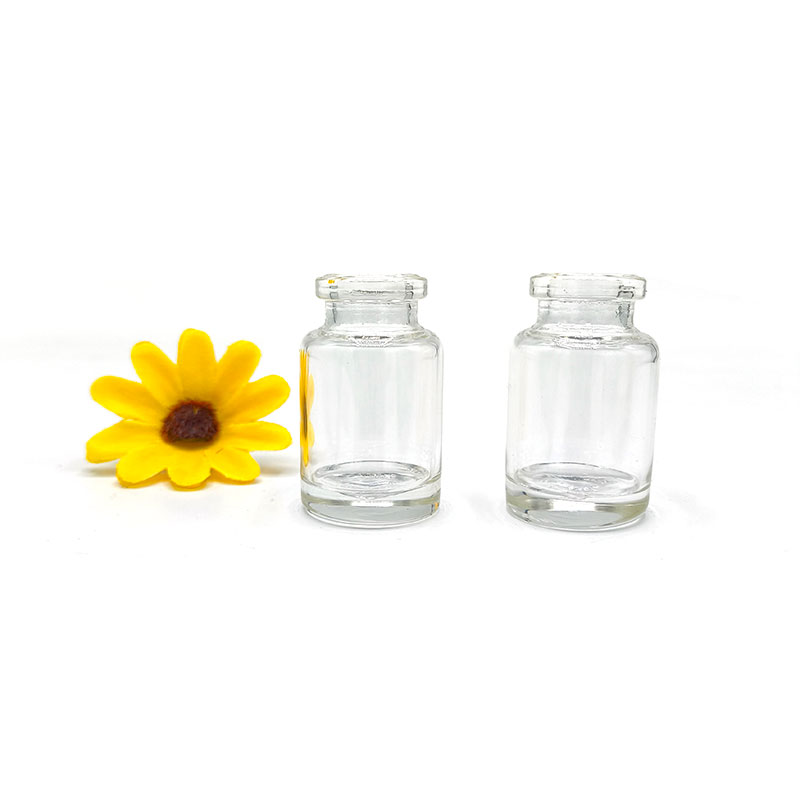
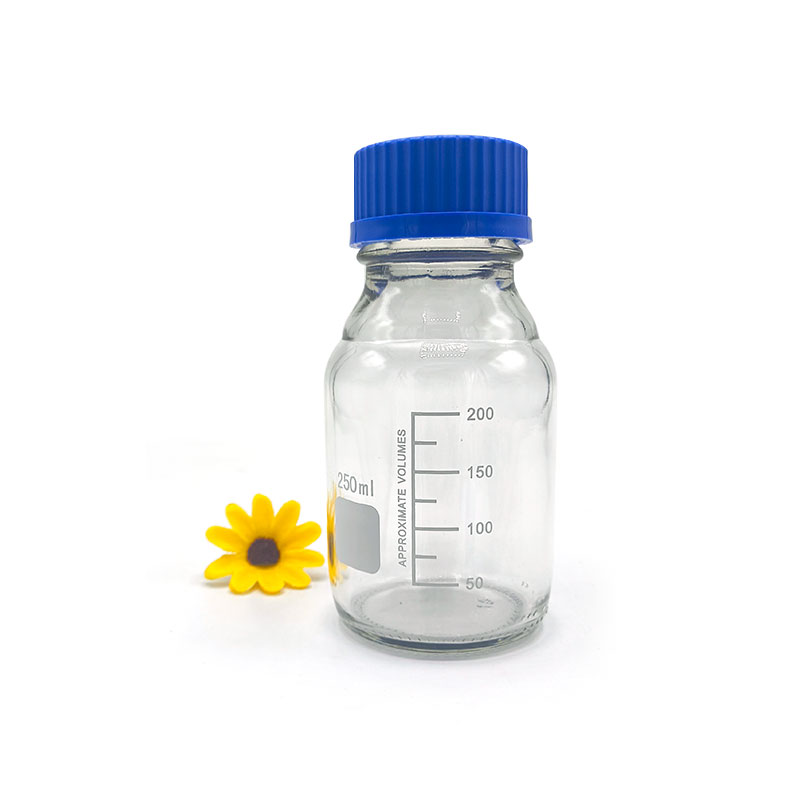
In chemistry, biology, and pharmaceuticals, reagent storage is crucial. It ensures sample integrity, experimental accuracy, and data reliability. A high-quality reagent bottle is the first line of defense for protecting precious samples and a silent yet crucial partner in the laboratory. Our company understands this and is dedicated to creating a line of glass reagent bottles that integrate superior materials, precision craftsmanship, and user-friendly design to meet your diverse needs, from routine storage to cutting-edge scientific research.
Ⅰ.Core Materials: Building a Stable and Reliable Storage Foundation
We firmly believe that excellent products begin with top-quality raw materials. Our reagent bottles are selected for the three core components, laying the foundation for impeccable quality.
1.High-grade borosilicate glass bottle:
Our bottles are made of borosilicate glass, especially 3.3 borosilicate glass, which is internationally recognized as the top laboratory glass material. Compared with ordinary 1.soda-lime glass, it has three incomparable advantages:
Excellent thermal shock resistance: It can withstand extremely high instantaneous temperature differences (usually ≥120°C). When sterilized, baked, or directly taken out of a refrigerated environment and placed in a high-temperature water bath, the risk of rupture due to thermal expansion and contraction is greatly reduced, ensuring the safety of the experimental process.
Excellent chemical stability: Highly resistant to water, acids, bases, salts, and organic solvents. Borosilicate glass provides extremely low extractables. This prevents container contamination. The material is ideal for high-purity standards, buffers, and long-term storage. It offers high mechanical strength and scratch resistance. Its exceptional transparency allows clear, quick viewing of reagents. This facilitates easy labeling and identification.
2.Polypropylene Bottle Cap
The cap uses high-quality polypropylene. This material demonstrates high chemical inertness. It effectively resists most acids, bases, and alcohols. PP shows excellent stress crack resistance and maintains good toughness. These properties prevent deformation during repeated use. They ensure a durable seal. PP meets food and drug contact standards. Its non-toxic, odorless nature enables broad applications.
3. PTFE gasket: the soul of the sealing system
The PTFE gasket built into the bottle cap is the core of the entire sealing system. PTFE is known as the "King of Plastics" and its chemical inertness surpasses almost all other polymer materials.
Absolute chemical inertness: Able to resist corrosion from almost all chemical reagents including aqua regia and strong oxidants, fundamentally avoiding contamination caused by the reaction between gaskets and reagents.
Extremely Low Adsorption
PTFE's smooth surface prevents material adhesion. This property effectively avoids reagent adsorption loss, especially for trace or highly active components. It ensures absolute concentration accuracy.
Wide Temperature Range
The material maintains stable performance across extreme temperatures from -200℃ to +260℃. It perfectly adapts to both high-temperature sterilization and ultra-low temperature storage requirements.
The Golden Combination
These three core materials - borosilicate glass bottle, PP cap, and PTFE gasket - create a clean, inert, sealed, and durable storage environment. Together they provide the highest protection level for your reagents.
Ⅱ.Product Series: Precise Matching for Different Application Scenarios
We categorize our bottles into four types based on mouth design differences. This classification meets various operational needs, from high-precision retrieval to rapid large-scale packaging.
Design Features
The bottle mouth has a much smaller inner diameter than the bottle body. Its shape features a slender neck.
Core Advantages
Reduces Volatilization and Evaporation
The small opening effectively minimizes solvent evaporation. It is ideal for low-boiling-point solvents like acetone, ether, and ethanol. This design also helps reduce laboratory air pollution. It minimizes potential exposure risks for operators.
Enables Precise Pouring and Control
The bottle design allows for easy control of liquid flow. It effectively prevents splashing and spillage. These bottles are particularly suited for transferring high-value reagents. They are also suitable for handling toxic or hazardous chemicals.
Design features: The diameter of the bottle mouth is close to the diameter of the bottle body, and the opening is spacious.
Core advantages:
Easy to fill and take: Convenient for holding solid powders, granules, crystals or viscous liquids (such as glycerol, culture medium). No obstruction when using tools such as spoons and spatulas.
Easy to clean: The wide bottle mouth makes cleaning the inner wall of the bottle easy and convenient, leaving no dead corners.
Convenient and direct sampling: pipettes, sampling spoons, etc. can be directly inserted for operation.
Typical applications: solid chemical reagents, powder samples, culture media, agarose, high-viscosity liquids, and materials that need to be taken frequently and in large quantities.
Design features: The bottle mouth diameter is between narrow mouth and wide mouth, which is the most versatile design.
Core advantages:
Balancing volatility control with ease of operation: A perfect balance is achieved between effective volatility control and convenient operation. It can store general liquid reagents well while being relatively easy to pour and access with tools.
Wide range of uses: As a "panacea" in the laboratory, it is suitable for the storage of most common reagents.
Typical applications: Inorganic acids, alkaline solutions, saline solutions, conventional chemical reagents and other daily laboratory liquids.
This is a professional series that meets the needs of specific experimental protocols and automated equipment. It is based on the standard bottle shape and has a more refined functional design.
Design features and variations:
Uniform thread specifications: Ensure perfect compatibility with various automatic bottle cap unscrews and automated liquid handling workstations.
Clear/Amber Options: Available in clear bottles (suitable for most reagents) and amber bottles (made of amber glass that blocks UV light from 290-450nm) to provide light protection for light-sensitive substances (such as silver nitrate, vitamin A, certain dyes, and biochemical reagents).
Ⅲ. Selection Guide and Comprehensive Services
Faced with a variety of choices, you can match them according to the following principles:
Storage characteristics: For light-sensitive substances, choose the amber bottles from the laboratory series; for high-purity/biochemical samples, choose high-purity/enzyme-free laboratory bottles.
We not only provide high-quality products, but also comprehensive services. From flexible options in a variety of capacities and specifications, to meticulous packaging to ensure safe transportation, to customized labeling and identification services, we aim to be the most trusted link in your laboratory supply chain.