News

How do Narrow-Mouth Reagent Bottles Solve Traditional Wide-Mouth Bottle Pain Points for Reagent Storage?

2025-10-17 0 Leave me a message

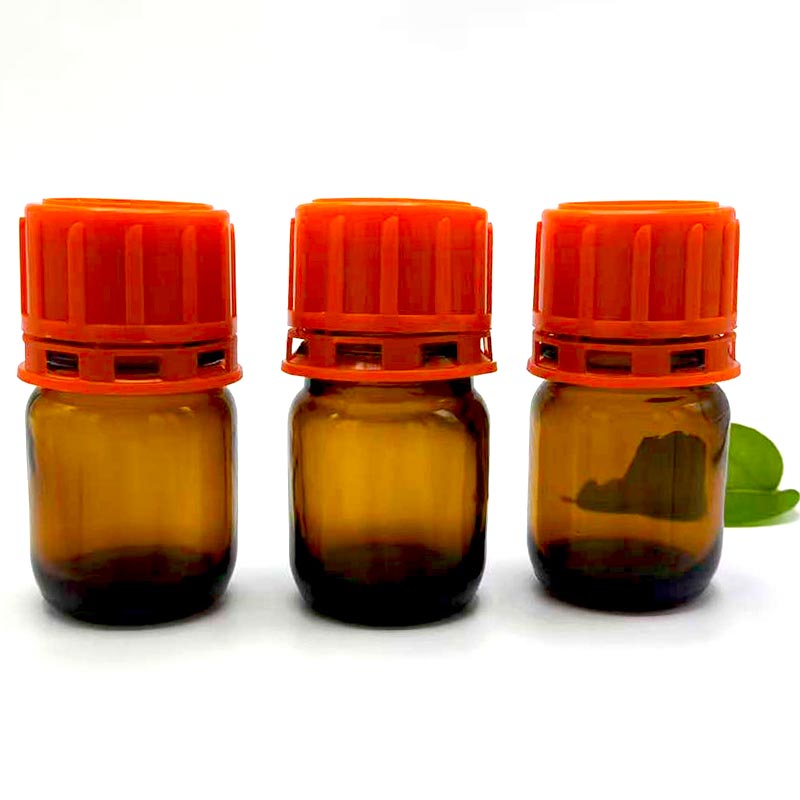
In fields such as laboratories, pharmaceutical R&D, and chemical testing, the "sealing, precision, and safety" of reagent storage directly affect experimental results and production quality. Narrow-mouth reagent bottles, with their unique mouth design and structural optimization, have become the preferred storage containers for volatile, hygroscopic, and highly corrosive reagents. Their four core advantages accurately address the pain points of traditional wide-mouth reagent bottles—"fast volatilization, easy contamination, and inaccurate dispensing."

Narrow Mouth Reagent Bottle

1. Sealing & Anti-Contamination: Ensuring Reagent Purity

The narrow-mouth design, with a frosted sealing stopper or screw cap, makes the container’s sealing much better. It also reduces the area where the reagent touches air.

For volatile reagents like ethanol and ether, the leakage rate of narrow-mouth reagent bottles is ≤0.01%. That’s 90% lower than wide-mouth bottles.

For hygroscopic reagents like anhydrous calcium chloride, the moisture absorption rate is ≤0.5% after 72 hours of storage. Wide-mouth bottles have a 4.2% rate in the same time.

In microbiology labs, the sealed structure also stops outside bacteria from getting in. It lowers the contamination rate of sterile reagents—from 8% with wide-mouth bottles to less than 1%. This makes sure experimental data is accurate.

2. Precise Dispensing: Reducing Experimental Errors

The diameter of the narrow mouth is only 10–20mm, which precisely controls the amount of reagent poured or the insertion of a pipette—avoiding the problems of "excessive pouring and residual waste" with wide-mouth bottles.

Experimental data shows that when dispensing trace reagents (≤10mL) with narrow-mouth bottles, the pouring error is ≤2%, while the error with wide-mouth bottles reaches 8%–12%.

When you use a pipette with it, the narrow mouth’s smooth inner wall makes reagent residue only 0.02mL each time. It saves about 15% of reagent compared to wide-mouth bottles.This makes narrow-mouth bottles very suitable for situations that need precise dosage, like chromatographic analysis and trace detection.

3. Safety & Leak-Proof: Avoiding Risk Hazards

For corrosive reagents like strong acids and alkalis, narrow-mouth bottles have a screw-sealed structure. It works with anti-corrosion gaskets to form a double leak-proof protection.

In a 1.5-meter drop test, narrow-mouth reagent bottles only have a 3% liquid leakage rate. Wide-mouth bottles have a 25% rate in the same test.

For flammable and explosive reagents, the sealed design lowers the risk of volatile gas leakage. It keeps the reagent vapor concentration in the storage area below 1/5 of the safety limit.

In chemical workshop transfer work, the narrow-mouth design also reduces accidental spills when moving. This makes the operation safer.

4. Stable Storage: Extending Reagent Service Life

The ratio of the internal space to the mouth of narrow-mouth bottles is more reasonable, reducing the probability of reagent oxidation and light-induced deterioration.

For photosensitive reagents such as silver nitrate, when stored in brown narrow-mouth bottles, their validity period extends from 3 months (with wide-mouth bottles) to 6 months.

For reagents that easily react with carbon dioxide (e.g., sodium hydroxide), the decay rate of active ingredients after sealed storage is ≤3% per month—60% lower than that of wide-mouth bottles.

Meanwhile, the narrow-mouth design facilitates upright and dense placement, saving about 20% of laboratory storage space.


Core Advantages Key Performance Data Adapted Scenarios Core Pain Points Addressed
Sealing & Anti-Contamination Leakage rate ≤0.01%, moisture absorption ≤0.5% Storage of volatile, hygroscopic reagents Reagent volatilization, moisture-induced deterioration
Precise Dispensing Pouring error ≤2%, residue ≤0.02mL Trace reagent dispensing, precision experiments Inaccurate dosage, reagent waste
Safety & Leak-Proof 3% leakage rate in 1.5m drop test Storage of corrosive, flammable/explosive reagents Liquid leakage corrosion, safety hazards
Stable Storage Reagent validity extended by 50%–100% Storage of photosensitive, reactive reagents Reagent deterioration, insufficient storage space


Currently, narrow-mouth reagent bottles are evolving toward "specialization and environmental friendliness": Borosilicate glass versions have been launched for high-purity reagents, expanding the temperature resistance range to -60℃~300℃; recyclable PP materials are used for conventional reagents, aligning with the needs of green laboratory construction. As a core carrier for reagent storage, their four advantages will continue to build a solid safety barrier for scientific research and production, making them an essential choice for laboratory consumables.


Related News
Leave me a message
X
We use cookies to offer you a better browsing experience, analyze site traffic and personalize content. By using this site, you agree to our use of cookies. Privacy Policy
RejectAccept